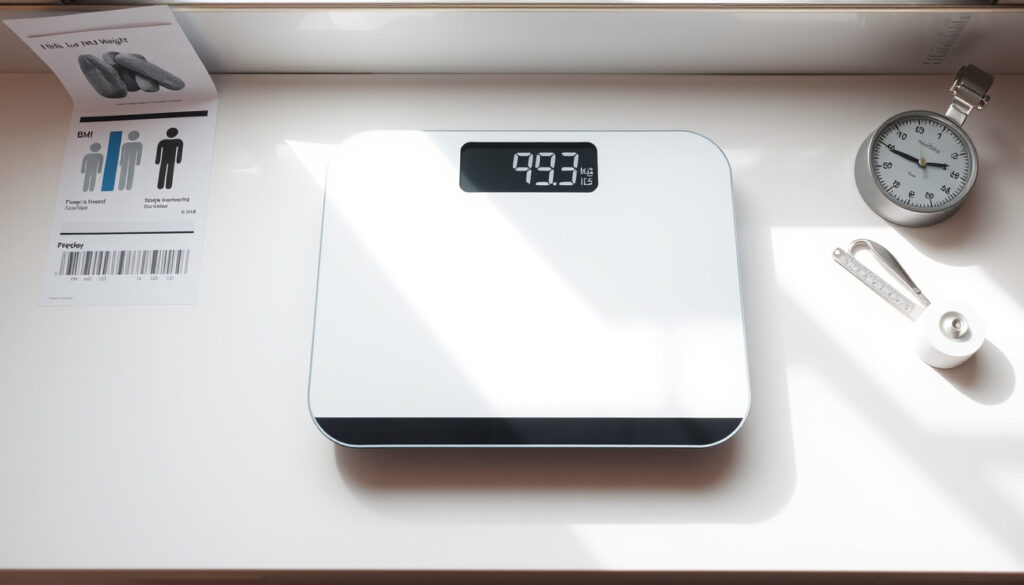
49 kg to lbs: 108.03 Pounds, Stones & BMI Explained
Few numbers come up more often in fitness forums and clinic waiting rooms than 49 kilograms. That’s just over 108 pounds for those keeping score in imperial units—but depending on who you ask, it can also look like 7 stone 10 pounds, a borderline BMI classification, or the average weight of a growing 12-year-old. This article breaks down the conversion math, regional weight units, and the health context that makes 49 kg mean different things to different people.
49 kg in pounds: 108.03 lbs ·
49 kg in stones and pounds: 7 stone 10 lbs ·
1 kg to lbs conversion factor: 2.20462 lbs ·
BMI range for 49 kg at 5’7″: underweight (below 18.5)
Quick snapshot
- 49 kg = 108.0 pounds (The Calculator Site)
- 49 kg = 7 stone 10 pounds (The Calculator Site)
- 1 kg = 2.205 lbs factor (Symbolab)
- “Good weight” cannot be assessed without height and age data
- BMI calculators apply only to adults 18+
- 50 kg = 110.23 lbs
- 48 kg = 105.82 lbs
- 49 kg = 1,728.8 ounces
| Measurement | Value | Source |
|---|---|---|
| Exact 49 kg to lbs | 108.0265 lbs | Symbolab |
| Stones equivalent | 7.72 stone (7 st 10 lb) | The Calculator Site |
| BMI at 165 cm (5’5″) | 20.3 (normal) | Calculator.net |
| BMI at 170 cm (5’7″) | 18.9 (normal low) | Calculator.net |
| Metric BMI formula | weight (kg) ÷ height (m)² | The Calculator Site |
| Imperial BMI formula | 703 × weight (lb) ÷ height (in)² | TopEndSports |
What is 49 kg in lbs?
The conversion from kilograms to pounds uses a fixed factor that has been standardized internationally. One kilogram equals exactly 2.20462 pounds, a definition that became even more precise in 2019 when the SI unit definitions were updated to rely on fundamental constants rather than physical artifacts (RapidTables).
Conversion formula
The math is straightforward: multiply the number of kilograms by 2.20462 to get pounds. For 49 kg, the calculation is 49 × 2.20462 = 108.0265 pounds. Most everyday contexts round this to 108.0 lbs or even 108 lbs for simplicity.
The calculation can also be expressed as dividing kilograms by 0.45359237, since 1 pound is defined as exactly 0.45359237 kilograms. Both methods produce identical results—the choice is simply a matter of preference (RapidTables).
If you have a kitchen scale that shows kilograms but your recipe calls for pounds, a quick mental trick: double the kilograms (49 × 2 = 98), then add about 10% (roughly 10), and you land near 108. For precise work, use the 2.20462 factor or a digital calculator.
Step-by-step calculation
- Step 1: Start with 49 kilograms.
- Step 2: Multiply by the conversion factor 2.20462.
- Step 3: 49 × 2.20462 = 108.0265 pounds.
- Step 4: Round to desired precision—108.0 lbs for casual use, 108.03 lbs for medical contexts.
The calculation is simple enough to do by hand with basic arithmetic, though digital tools eliminate rounding errors entirely. Online calculators from Symbolab and The Calculator Site handle this conversion instantly with full decimal precision.
49 kg to lbs and ounces
For applications requiring greater precision, 49 kg breaks down further into pounds and ounces. The fractional part of 108.0265 pounds equals approximately 0.42 pounds, and since 1 pound contains 16 ounces, that converts to roughly 6.7 ounces. So 49 kg = 108 lb 6.7 oz (or approximately 108 lb 7 oz).
In total, 49 kg equals 1,728.8 ounces. This level of detail matters for cooking, pharmaceutical applications, or any context where fractional pounds are insufficient.
What weight is 49 kg in stones and pounds?
Stones remain the dominant weight unit in the United Kingdom and Ireland, where body weight is typically expressed as stones and pounds rather than pure pounds or kilograms. One stone equals 14 pounds, creating a hybrid system that sits between the metric and imperial conventions used elsewhere.
Stones and pounds breakdown
Converting 49 kg to stones and pounds requires two steps. First, convert to pounds (108.0265 lb), then divide by 14 to get stones: 108.0265 ÷ 14 = 7.716 stone. The decimal portion (.716) converts back to pounds: 0.716 × 14 = 10.02 pounds.
The result is 7 stone 10 pounds (often written as 7 st 10 lb or 7st 10lb). Official NHS conversion charts list this equivalence as standard practice in UK healthcare settings (Community Pharmacy Scotland).
The stone system reflects a historical convention that persists in everyday British usage. While healthcare increasingly uses kilograms, patients frequently need both numbers for personal tracking. Understanding 49 kg = 7 stone 10 lb helps bridge conversations between clinicians using metric and individuals familiar with imperial units.
Conversion chart reference
| Kilograms | Pounds | Stones + Pounds |
|---|---|---|
| 48 kg | 105.82 lb | 7 st 7 lb |
| 49 kg | 108.03 lb | 7 st 10 lb |
| 50 kg | 110.23 lb | 7 st 12 lb |
| 55 kg | 121.25 lb | 8 st 9 lb |
The bracketing values show how 49 kg sits between 48 kg (7 stone 7 pounds) and 50 kg (7 stone 12 pounds). This placement matters for anyone tracking weight changes—moving from 48 to 49 kg represents roughly a 2-pound gain, which may or may not be significant depending on context.
Common UK weight equivalents
Beyond the precise conversion, practical comparisons help contextualize 49 kg. A person weighing 49 kg is roughly equivalent to:
- 15.4 stones (uncommon UK presentation)
- 108 pounds (close to the US convention)
- Approximately 539,700 grains (used in some specialized applications)
The stones and pounds convention remains prevalent enough that UK conversion charts from The Calculator Site and official NHS materials consistently display both metric and imperial values side by side.
Is 49 kg a good weight?
The answer depends entirely on factors that the number alone cannot provide. Height, age, gender, muscle mass, bone density, and overall health status all influence whether 49 kg represents a healthy weight for any individual. Without this context, “good weight” remains undefined.
Factors affecting ideal weight
Body Mass Index (BMI) provides one standardized framework for evaluating weight relative to height. The BMI formula divides weight in kilograms by the square of height in meters, producing a number that healthcare providers compare against standardized ranges (NHS).
For an adult of average height (roughly 5’4″ or 163 cm), 49 kg produces a BMI of approximately 18.4, which falls just below the 18.5 threshold marking the boundary between “healthy” and “underweight.” The same 49 kg at 5’7″ (170 cm) yields a BMI of about 17.0, clearly underweight by clinical standards.
BMI calculation for 49 kg
The metric BMI formula is straightforward: BMI = weight (kg) ÷ [height (m)]². Working through two common heights:
- At 160 cm (5’3″): 49 ÷ (1.6)² = 49 ÷ 2.56 = 19.14 (healthy)
- At 175 cm (5’9″): 49 ÷ (1.75)² = 49 ÷ 3.0625 = 16.00 (underweight)
The difference between these outcomes—nearly 3 full BMI points—illustrates why height information is essential for any health assessment. The same weight that represents healthy for a shorter person may indicate underweight for someone taller.
BMI categories set by WHO and adopted by health authorities worldwide classify scores below 18.5 as underweight, 18.5–24.9 as healthy weight, 25–29.9 as overweight, and 30 and above as obese (The Calculator Site). These thresholds apply to general adult populations but have known limitations for athletes, elderly individuals, and certain ethnic groups.
Health ranges by height
Using BMI ranges, the healthy weight span for any given height can be calculated. For a 165 cm (5’5″) adult, the healthy weight range spans approximately 50–68 kg. At this height, 49 kg falls slightly below the healthy range.
For a 155 cm (5’1″) adult, the healthy range spans approximately 44–60 kg. Here, 49 kg falls comfortably within healthy territory. This contrast demonstrates why universal “good weight” labels are misleading without accompanying height data.
Professional evaluation from a healthcare provider accounts for factors beyond BMI alone, including waist circumference, family history, existing health conditions, and lifestyle factors. Self-assessing based on weight alone risks missing important context.
Is 50 kg underweight for 5’7″?
At 5’7″ (170 cm), 50 kg produces a BMI of approximately 17.3, placing it below the 18.5 clinical threshold for underweight classification. This is roughly a full point below the borderline, indicating that 50 kg at this height warrants closer examination.
BMI for 5’7″ and 50 kg
The calculation is direct: 50 kg ÷ (1.70 m)² = 50 ÷ 2.89 = 17.30 BMI. This falls in the underweight category according to WHO standards, which classify any BMI below 18.5 as underweight (NHS).
BMI categories within the underweight range include mild thinness (17–18.5), moderate thinness (16–17), and severe thinness (below 16) according to Calculator.net. At 17.3, a 5’7″ person weighing 50 kg sits in the mild thinness category—close to but not reaching the moderate classification.
BMI does not account for muscle mass, frame size, or body composition. A muscular athlete at 5’7″ might weigh 75 kg (BMI 26) while remaining lean and healthy, while a sedentary individual at the same height with minimal muscle could be underweight at 50 kg. Frame size alone can account for 5–10 kg of variation among individuals of identical height.
Healthy weight range
For a 5’7″ adult, the healthy BMI range (18.5–24.9) translates to a weight range of approximately 54–73 kg. This means someone at this height should typically weigh at least 54 kg to fall within normal BMI classification.
The lower bound of healthy weight (54 kg at 5’7″) is 4 kg more than 50 kg—a meaningful difference that places 50 kg approximately 8% below the minimum healthy weight for this height.
Several factors could normalize a lower weight at this height: youth (growth still occurring), small frame size, or high activity levels with athletic conditioning. However, these exceptions require individual assessment rather than assumption.
Fitness considerations
For fitness goals, the context matters significantly. Someone training for a sport that emphasizes light body weight (distance running, gymnastics, martial arts weight classes) may intentionally maintain lower weight, though typically with careful attention to nutrition and health monitoring.
For general health and fitness, the focus should shift from weight alone to body composition, cardiovascular fitness, strength, and overall wellbeing. A 5’7″ person at 50 kg who exercises regularly, eats adequately, and feels energetic may be healthier than a 70 kg sedentary person—despite the lower BMI reading.
The NHS recommends consulting a healthcare provider before making significant weight changes, particularly for individuals near the underweight threshold (NHS).
Is 49 kg a good weight for a 12 year old?
Childhood and adolescent weight requires entirely different assessment tools than adult BMI. Growth charts, gender-specific percentiles, and developmental stage all factor into evaluating whether 49 kg is appropriate for a 12-year-old—and the answer can swing widely depending on the individual.
Average 12-year-old weights
According to growth chart data referenced by Calculator.net and pediatric health guidelines, the typical weight range for 12-year-old girls spans approximately 40–55 kg, while boys of the same age typically range from 39–54 kg. This means 49 kg falls within the average range for both genders—neither notably high nor low.
However, “average” encompasses substantial variation. A 12-year-old at the 95th percentile might weigh 65+ kg, while one at the 5th percentile might weigh 35 kg. Both can represent healthy individuals at different ends of the normal spectrum.
Growth charts
Pediatric healthcare providers use growth charts developed by WHO and adapted by individual countries to track childhood development. These charts plot weight against age, height against age, and BMI against age, showing how a child compares to population norms.
A 12-year-old at the 50th percentile for weight might weigh around 40–45 kg, while one at the 75th percentile could weigh 50–55 kg. Context matters enormously—a 12-year-old at the 75th percentile is not “overweight” but rather taller or more heavily built than average while remaining healthy.
Standard BMI calculations do not apply to children under 18. Pediatric health providers use age- and gender-specific BMI percentiles rather than absolute BMI thresholds. Applying adult BMI cutoffs to children produces inaccurate assessments. A healthcare provider can plot a child’s measurements on growth charts to determine appropriate weight ranges for their specific age, height, and developmental stage.
Healthy ranges for girls and boys
During puberty, girls and boys develop differently, with girls typically entering puberty earlier. A 12-year-old girl who has already begun puberty may weigh more than a late-blooming boy of the same age, even if both are healthy.
- 12-year-old girls: Average range approximately 40–55 kg, depending on height and developmental stage
- 12-year-old boys: Average range approximately 39–54 kg, depending on height and developmental stage
- Key factor: Height at age 12 varies widely (140–165 cm), meaning weight assessment must account for height
49 kg could represent perfectly healthy weight for a taller 12-year-old of either gender, or might indicate the need for evaluation for a shorter child. Without height data, no definitive assessment is possible.
Parents concerned about their child’s weight should consult the child’s pediatrician, who can plot measurements on appropriate growth charts and provide context-specific guidance.
Step-by-step guide to convert kg to lbs
Whether you need to convert 49 kg or any other weight, the process remains identical. Here’s how to handle the conversion accurately.
- Gather your tools: You’ll need the exact kilogram weight you want to convert, a calculator (digital or physical), and optionally a reference for the conversion factor (2.20462).
- Apply the conversion factor: Multiply the number of kilograms by 2.20462. For 49 kg: 49 × 2.20462 = 108.0265.
- Round appropriately: For everyday use, round to one decimal place (108.0 lbs). For medical or technical contexts, keep two or more decimal places.
- For stones and pounds: Divide the pound value by 14 to get stones, keep the remainder as pounds. 108.0 ÷ 14 = 7 remainder 10, so 7 stone 10 pounds.
- For ounces: Take the decimal portion of pounds (0.0265), multiply by 16 to get ounces. 0.0265 × 16 = 0.424 oz, meaning 108 lb 0.4 oz.
Alternative method: divide kilograms by 0.45359237 instead of multiplying by 2.20462. Both approaches yield identical results—49 ÷ 0.45359237 = 108.0265 pounds.
Common conversions: 1 kg = 2.205 lbs, 5 kg = 11.02 lbs, 10 kg = 22.05 lbs, 20 kg = 44.09 lbs. For quick mental estimates, the factor 2.2 works well (slightly underestimating by about 0.2%).
Upsides
- Simple, fixed conversion factor—no variable rates
- Works for any kilogram value, not just 49 kg
- Supports both metric and imperial understanding
- Enables comparison across regional weight systems
Downsides
- Rounding introduces small errors in precise applications
- Stones/pounds system less intuitive for those unfamiliar
- BMI context requires additional height data
- Weight alone insufficient for health assessment
Expert perspectives on BMI and weight conversion
Healthcare authorities emphasize both the utility and limitations of standardized weight metrics.
“Body Mass Index is calculated using either the metric or imperial BMI formula. In both cases, you divide your weight by your height raised to the power of 2.” — The Calculator Site (Health Calculator Provider)
“The constant 703 converts from pounds/inches² to the standard kg/m² units, ensuring consistency between metric and imperial BMI calculations.” — TopEndSports (Sports Nutrition Site)
“Your BMI result will be displayed as a number with one of these weight categories: underweight; a healthy weight; overweight; obese.” — NHS (UK National Health Service)
These sources collectively highlight that BMI serves as a screening tool rather than a definitive health diagnosis. The formulas are standardized, but individual interpretation requires professional guidance.
Standardized conversion factors and BMI formulas exist because international scientific and medical communities require consistent measurement. However, these tools screen for potential concerns—they don’t replace clinical judgment about individual patients. The conversion from 49 kg to 108 lbs is exact; the health meaning of that weight is not.
For Americans tracking fitness metrics, understanding the relationship between kilograms and pounds matters whether you’re following international workout programs, using imported equipment with kg markings, or communicating with healthcare providers in countries using different systems. The conversion 49 kg = 108.03 lbs provides the numeric bridge—but the health context requires additional information only a healthcare provider can assess.
Related reading: 100 US to CAD – Live Exchange Rate and Converter Today · 16000 USD to CAD – Current Rate and Conversion Guide
thecalculatorsite.com, drbillsukala.com, thecalculatorsite.com, ramsayhealth.co.uk, coolconversion.com
For context in fitness tracking, the 45 kg to lbs conversion yields 99.21 pounds, aiding BMI comparisons alongside stones and averages.
Frequently asked questions
What is the average weight of a 12-year-old?
The average weight for a 12-year-old varies significantly by gender, height, and developmental stage. Generally, girls average 40–55 kg and boys average 39–54 kg. However, normal range spans from approximately 35–65 kg depending on individual growth patterns. Growth charts and pediatric BMI percentiles—not adult BMI thresholds—should be used for children.
How much should a 12-year-old girl weigh?
A 12-year-old girl’s healthy weight depends on her height and developmental stage rather than a fixed number. Most 12-year-old girls weigh between 40 and 55 kg, but a taller girl might be healthy at 60 kg while a shorter one is healthy at 42 kg. Consult pediatric growth charts for personalized assessment.
What is 50 kg in stones and pounds?
50 kg equals approximately 7 stone 12 pounds (7 st 12 lb), or rounded to 8 stone for casual use. The precise conversion is 50 × 2.20462 = 110.23 lbs, which divides to 7 stone (98 lb) plus 12.23 pounds. Official NHS conversion charts confirm this equivalence.
Is 48 kg underweight?
Whether 48 kg is underweight depends entirely on height. At 5’0″ (152 cm), 48 kg produces a BMI of approximately 20.8—healthy. At 5’10” (178 cm), the same weight yields a BMI of 15.4—underweight. Without height information, the question cannot be answered.
What is 49 kg to BMI?
Converting 49 kg to BMI requires height. At 170 cm (5’7″), 49 kg = 17.0 BMI (underweight). At 160 cm (5’3″), 49 kg = 19.1 BMI (healthy). The BMI formula is weight (kg) ÷ height (m)². For personalized BMI assessment, consult a healthcare provider.
Is 5’7″ and 50 kg healthy?
At 5’7″ (170 cm), 50 kg produces a BMI of approximately 17.3, which falls in the underweight category (below 18.5). The healthy weight range for this height is approximately 54–73 kg. Consider speaking with a healthcare provider about whether weight gain would benefit your overall health.
How much is 50 kg in stones and lbs?
50 kg = 110.23 pounds = 7 stone 12.23 pounds (or approximately 8 stone). To convert: multiply 50 × 2.20462 = 110.23 lbs, then divide 110.23 ÷ 14 = 7.87 stone, which breaks down to 7 stone plus 0.87 × 14 = 12.2 pounds.
More related posts
 Dhawa Cayo Santa Maria: Reviews, Beaches & All Inclusive Guide
 Houses for Sale in Saskatoon: 2026 Market Guide & Buyer Tips
 Cast of The Diplomat: Full Cast List Seasons 1-4
 Is Trump a Republican? Party Affiliation and History Explained
 Galaxy A14 to Buy – Lowest Prices from $50 at Top Retailers
 Houses for Sale in Charlesbourg: 2025 Buyer Guide
 How Did Anne Burrell Die – Official Cause Revealed
 Elizabeth Olsen: Nepo Baby, Richest Sister, LGBTQ Support