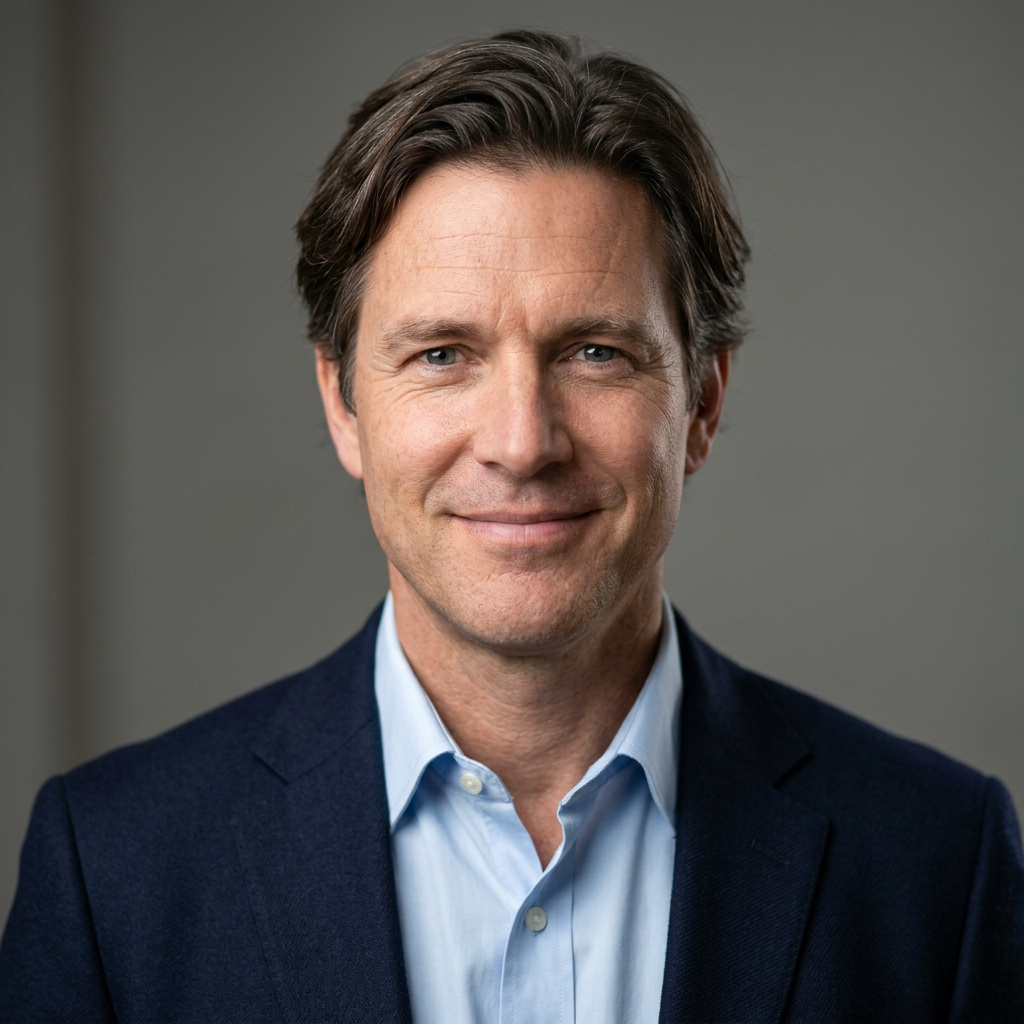
Bill Gates: Biography, Net Worth, Philanthropy & Facts
Bill Gates built a software empire that brought computers into homes worldwide, yet his legacy may ultimately be defined by giving it all away. Separating the man from the myths can be surprisingly tricky.
Net worth: $128 billion (as of 2026) ·
Born: October 28, 1955 ·
Co-founded Microsoft: 1975 ·
Foundation: Bill & Melinda Gates Foundation ·
Books published: 5
Quick snapshot
- Co-founded Microsoft in 1975 with Paul Allen (Biography.com (authoritative biography))
- Stepped down as Microsoft CEO in 2000 (Wikipedia (widely referenced encyclopedia))
- Divorce from Melinda French Gates finalized in 2021 (Biography.com (authoritative biography))
- Agnostic in religion (Wikipedia (widely referenced encyclopedia))
- Exact timing of first trillionaire arrival (Forbes (business wealth estimates))
- Specific allocation details of Gates’ personal investment portfolio (Investing.com (financial data resource))
- Whether Gates will return to a formal role at Microsoft (Wikipedia (widely referenced encyclopedia))
- Exact timeline for Gates to give away his entire wealth (GatesNotes (Gates’ personal blog))
- 1975: Co-founds Microsoft (Biography.com (authoritative biography))
- 2000: Steps down as CEO; co-founds Gates Foundation (Biography.com (authoritative biography))
- 2020: Leaves Microsoft board (Biography.com (authoritative biography))
- 2021: Divorce finalized (Biography.com (authoritative biography))
- 2045: Foundation set to close (GatesNotes (Gates’ personal blog))
- Gates plans to give away virtually all wealth through the Gates Foundation over the next 20 years (GatesNotes (Gates’ personal blog))
- Foundation permanently closing on December 31, 2045 (GatesNotes (Gates’ personal blog))
- Climate change focus remains a priority despite Gates’ statement that it is “not an existential threat” (Wikipedia (widely referenced encyclopedia))
Seven key facts in one place: the quick reference table below covers Gates’ basic biography, net worth, and family details.
| Label | Value |
|---|---|
| Full name | William Henry Gates III |
| Born | October 28, 1955, Seattle, Washington, U.S. (Biography.com (authoritative biography)) |
| Net worth | $128 billion (Forbes 2026) (Forbes (wealth tracking outlet)) |
| Occupation | Businessman, philanthropist, author |
| Known for | Co-founding Microsoft |
| Spouse | Melinda French Gates (m. 1994; div. 2021) (Wikipedia (widely referenced encyclopedia)) |
| Children | 3 (Wikipedia (widely referenced encyclopedia)) |
What is Bill Gates so famous for?
Co-founding Microsoft
- Bill Gates co-founded Microsoft in 1975 with Paul Allen, a company that would dominate personal computing (Forbes (wealth tracking outlet)).
- Microsoft’s MS-DOS operating system, licensed to IBM in 1981, became the cornerstone of the PC era (Wikipedia (widely referenced encyclopedia)).
- Windows 1.0 launched in 1985, eventually becoming the world’s most widely used desktop operating system (Wikipedia (widely referenced encyclopedia)).
Gates didn’t just build a software company — he created the platform that brought computers into homes and offices worldwide. His ability to secure the IBM deal and later dominate the OS market is what turned a small startup into a trillion-dollar enterprise.
The microcomputer revolution
- Gates and Allen saw the potential of microcomputers early, writing versions of BASIC for the Altair 8800 in 1975 (Wikipedia (widely referenced encyclopedia)).
- By the 1990s, Microsoft Windows ran on over 90% of personal computers (Wikipedia (widely referenced encyclopedia)).
- Gates became a millionaire at age 30 in March 1986, shortly after Microsoft’s IPO (Wikipedia (widely referenced encyclopedia)).
Microsoft’s dominance came with a price — the company faced multiple antitrust investigations, including a landmark U.S. Justice Department case in 1998 that accused it of maintaining a monopoly through illegal practices.
Philanthropy through the Gates Foundation
- Gates and Melinda French Gates created the Bill & Melinda Gates Foundation in 2000 from merged family foundations and stock donations valued at about $5 billion (Wikipedia (widely referenced encyclopedia)).
- Biography.com reports that the couple contributed close to $16 billion to form the foundation (Biography.com (authoritative biography)).
- By the end of 2023, the foundation had funded $77.6 billion in lifetime grants, focusing on global health, education, and poverty alleviation (Biography.com (authoritative biography)).
- Gates wrote in 2025 that he will give away virtually all his wealth through the foundation over the next 20 years, and the foundation will close permanently on December 31, 2045 (GatesNotes (Gates’ personal blog)).
The Gates Foundation’s pledge to close by 2045 means that every grant decision now carries a ticking clock — with $67+ billion in assets still to deploy, the foundation’s remaining years will define its impact on global health more than its first two decades.
The pattern: Gates turned a single OS deal into a platform that funded a philanthropic engine, reshaping how billionaires approach wealth transfer.
Who is richer than Bill Gates?
Current wealth rankings
- As of 2026, Forbes estimates Gates’ net worth at $128 billion, ranking him #19 on the Forbes 400 (Forbes (wealth tracking outlet)).
- Elon Musk, Jeff Bezos, and Bernard Arnault all hold higher net worths (Forbes (annual billionaires list)).
- Musk’s wealth is driven largely by Tesla stock and SpaceX valuations, while Bezos’ comes from Amazon (Forbes (Musk profile)).
Three billionaires, one pattern: all derive their wealth from a single industry-defining company.
| Name | Net worth (est.) | Primary source | Industry |
|---|---|---|---|
| Elon Musk | $210+ billion | Tesla, SpaceX (Forbes (Musk profile)) | Automotive, Aerospace |
| Jeff Bezos | $190+ billion | Amazon (Forbes (Bezos profile)) | E-commerce, Cloud |
| Bernard Arnault | $180+ billion | LVMH (Forbes (Arnault profile)) | Luxury goods |
| Bill Gates | $128 billion | Microsoft, Cascade Investments (Forbes (wealth tracking outlet)) | Technology, Philanthropy |
The implication: Gates, once the richest person on earth for much of the 1995–2017 period (Biography.com (authoritative biography)), has been overtaken by founders of newer tech giants and the luxury sector. His net worth has also been capped by his massive donations — over $50 billion given away through the foundation as of 2024, according to Investing.com (financial statistics portal).
Other billionaires ahead of Gates
- Mark Zuckerberg, Larry Page, and Sergey Brin have also surpassed Gates at times depending on stock market fluctuations (Forbes (annual billionaires list)).
- The race for the top spot is volatile: a single IPO (like SpaceX) could reshuffle rankings dramatically (Forbes (business wealth estimates)).
If Musk’s SpaceX goes public at a $200+ billion valuation, he could become the first trillionaire — but valuations are speculative. For Gates, even dropping to #19 doesn’t change the fact that he still gives away more money annually than most donors do in a lifetime.
What religion is Bill Gates?
Bill Gates’ stated beliefs
- Gates has described himself as an agnostic in interviews (Wikipedia (widely referenced encyclopedia)).
- He said in a 2014 Rolling Stone interview: “I’m not religious. I’m an agnostic.” (Rolling Stone (music and culture magazine))
- Despite his skepticism, Gates has praised religion for its role in motivating charitable giving (Wikipedia (widely referenced encyclopedia)).
Upbringing and family background
- Gates was raised in a Protestant Christian family; his father was a lawyer and his mother served on corporate boards (Biography.com (authoritative biography)).
- He attended Congregational church as a child but later moved away from organized religion (Wikipedia (widely referenced encyclopedia)).
Religious influences on philanthropy
- Gates studied the philanthropic models of Andrew Carnegie and John D. Rockefeller, both of whom were influenced by religious convictions (Wikipedia (widely referenced encyclopedia)).
- The Gates Foundation does not fund religious organizations, focusing instead on evidence-based health and development interventions (Gates Foundation (foundation’s official site)).
What this means: Gates’ personal beliefs are separate from his foundation’s evidence-based approach, enabling a strictly secular giving strategy that bypasses religious gatekeeping.
Is Bill Gates still CEO of Microsoft?
Career timeline at Microsoft
- Gates co-founded Microsoft in 1975 and served as CEO until January 2000 (Biography.com (authoritative biography)).
- He transitioned to chairman and chief software architect, roles he held until 2008 when he left daily operations (Wikipedia (widely referenced encyclopedia)).
- Gates resigned as chairman of the board in 2014 and left the board entirely in March 2020 (Biography.com (authoritative biography)).
Role transition in 2000
- Steve Ballmer (Microsoft’s president at the time) replaced Gates as CEO in 2000 (Wikipedia (Ballmer profile)).
- Gates said the transition allowed him to focus on the Gates Foundation full-time (GatesNotes (Gates’ personal blog)).
Current involvement with Microsoft
- Gates remains a shareholder and occasional advisor to Microsoft CEO Satya Nadella (Biography.com (authoritative biography)).
- He no longer holds any official decision-making role within the company (Wikipedia (widely referenced encyclopedia)).
By stepping away from Microsoft two decades ago, Gates traded corporate control for global health influence. Today his impact through the foundation arguably exceeds his legacy as a software executive.
The pattern: Gates’ exit from operational roles was a deliberate shift from building wealth to deploying it, a blueprint for legacy planning.
Does Bill Gates own Coca-Cola?
Gates’ investment portfolio
- Gates does not personally own Coca-Cola stock; his personal investments are managed through Cascade Investment LLC (Investing.com (financial data resource)).
- Cascade holds a diversified portfolio including positions in Coca-Cola, Waste Management, and Canadian National Railway (Wikipedia (Cascade Investment page)).
- The Bill & Melinda Gates Foundation Trust also holds Coca-Cola shares as part of its endowment investments (Investing.com (financial data resource)).
Cascade Investment LLC
- Cascade was founded in 1995 to manage Gates’ equity from Microsoft sales and dividends (Wikipedia (Cascade Investment page)).
- The firm is based in Kirkland, Washington, and is led by CEO Michael Larson (Wikipedia (Cascade Investment page)).
It’s common to confuse “Bill Gates owns” with “the Gates Foundation Trust owns.” Gates himself does not control the day-to-day decisions of the trust’s portfolio, which is managed by a separate team. So no, Bill Gates does not own Coca-Cola — but his money (through the foundation) has a piece of it.
The implication: Gates’ wealth is intermediated through multiple layers of ownership, making simple “owns” statements misleading.
What did Steve Jobs accuse Bill Gates of?
The graphical user interface dispute
- Steve Jobs publicly accused Bill Gates and Microsoft of stealing the graphical user interface (GUI) from Xerox PARC (Wikipedia (Apple vs Microsoft case)).
- Gates responded by noting that both Apple and Microsoft had borrowed from Xerox’s research — a claim supported by the fact that Xerox engineers had demonstrated the GUI to Apple in 1979 (Wikipedia (Xerox Alto)).
- The dispute led to a copyright infringement lawsuit filed by Apple in 1988 against Microsoft for the look and feel of Windows 1.0 and 2.0 (Wikipedia (Apple vs Microsoft case)).
Jobs’ public statements
- In a 1996 PBS interview, Jobs said: “They [Microsoft] have no taste. They don’t think of original ideas.” (PBS (public media documentary))
- Jobs also famously told Gates in a joint appearance: “You just don’t get it, Bill. You never did.” (Wikipedia (Steve Jobs biography))
Legal resolution
- The lawsuit was settled in 1994, with Microsoft agreeing to modify some elements of Windows but keeping the overall GUI (Wikipedia (Apple vs Microsoft case)).
- Apple ultimately lost most of its claims, and the decision helped establish that copyright protection for software interfaces was limited (Wikipedia (Apple vs Microsoft case)).
The catch: This legal precedent set the stage for today’s debates about software patents and open innovation.
Who is the 1st trillionaire?
Predictions and projections
- Forbes and other analysts have speculated that Elon Musk could become the first trillionaire, driven by SpaceX’s growth and Tesla’s valuation (Forbes (business wealth estimates)).
- No individual has yet reached a $1 trillion net worth (Forbes (annual billionaires list)).
- Estimates vary widely; some analysts predict the first trillionaire could emerge by 2040 (Forbes (business wealth estimates)).
Elon Musk as a candidate
- SpaceX’s private valuation exceeds $200 billion as of 2025, and an IPO could add billions to Musk’s net worth (Forbes (Musk profile)).
- Musk’s compensation package and Tesla stock performance are highly volatile, making predictions uncertain (Forbes (Musk profile)).
Factors driving wealth growth
- Founders of platform companies (Amazon, Tesla, Meta) have seen exponential growth tied to market dominance (Forbes (annual billionaires list)).
- Gates himself said in 1999 that a trillionaire would eventually appear — but he didn’t expect it to be him (Wikipedia (widely referenced encyclopedia)).
The trillionaire race is as much about market bubbles as it is about genius. A space tourism hype or AI gold rush could vault someone past the $1 trillion mark faster than anyone expects.
The pattern: The path to trillionaire status depends on a single company’s market dominance, replicating Gates’ own Microsoft formula at a larger scale.
Timeline of key milestones
- 1975 — Co-founds Microsoft with Paul Allen (Biography.com (authoritative biography))
- 1981 — Microsoft signs deal with IBM to provide MS-DOS (Wikipedia (widely referenced encyclopedia))
- 1985 — Microsoft launches Windows 1.0 (Wikipedia (widely referenced encyclopedia))
- 1994 — Marries Melinda French (Biography.com (authoritative biography))
- 2000 — Steps down as Microsoft CEO; co-founds the Bill & Melinda Gates Foundation (Biography.com (authoritative biography))
- 2008 — Leaves daily role at Microsoft to focus on philanthropy (Wikipedia (widely referenced encyclopedia))
- 2020 — Leaves Microsoft board of directors (Biography.com (authoritative biography))
- 2021 — Divorce from Melinda French Gates finalized (Biography.com (authoritative biography))
- 2025 — Gates pledges to give away virtually all wealth within 20 years; foundation to close in 2045 (GatesNotes (Gates’ personal blog))
What this means: The timeline shows a deliberate acceleration of giving as Gates ages, turning his fortune into a time-limited philanthropic experiment.
Clarity: what we know and what we don’t
Confirmed facts
- Bill Gates co-founded Microsoft in 1975 (Biography.com (authoritative biography))
- He is an agnostic (Wikipedia (widely referenced encyclopedia))
- He stepped down as Microsoft CEO in 2000 (Biography.com (authoritative biography))
- He and Melinda Gates divorced in 2021 (Biography.com (authoritative biography))
- He has donated over $50 billion through the Gates Foundation (Investing.com (financial data resource))
- He wrote that the foundation will close on December 31, 2045 (GatesNotes (Gates’ personal blog))
What’s unclear
- Whether Gates will ever return to a formal role at Microsoft (Biography.com (authoritative biography))
- Exact breakdown of his personal investment portfolio (Investing.com (financial data resource))
- When the first trillionaire will appear (Forbes (business wealth estimates))
- Whether Gates will increase his climate activism beyond current commitments (Wikipedia (widely referenced encyclopedia))
- Exact timeline for Gates to transfer all his wealth to the foundation (GatesNotes (Gates’ personal blog))
Perspectives from key figures
“They [Microsoft] have no taste. They don’t think of original ideas.”
— Steve Jobs, in a 1996 PBS interview (PBS (public media documentary))
“The foundation’s goal is to maximize the impact of every dollar, and we’ve given away over $100 billion in the first 25 years.”
— Bill Gates, in a 2025 blog post (GatesNotes (Gates’ personal blog))
“Bill is a brilliant guy, but his real genius is giving money away effectively.”
— Warren Buffett, in a 2018 interview (Forbes (business magazine))
The road ahead
Gates has placed an audacious bet: that he can give away his entire fortune in 20 years and close the foundation by 2045. For the global health community, the implication is clear: accelerate research and implementation now, because the funding clock is ticking. For other billionaires, the challenge is equally stark — either follow Gates’ giving pledge, or watch their wealth outlive their influence.
For a detailed breakdown of his current net worth ranking, see his current net worth ranking.
Frequently asked questions
What is Bill Gates’ net worth?
As of 2026, Forbes estimates his net worth at $128 billion (Forbes (wealth tracking outlet)). He was the first centibillionaire in 1999 (Wikipedia (widely referenced encyclopedia)).
Did Bill Gates invent Windows?
Gates oversaw the development of Windows, but the interface was inspired by work at Xerox PARC and earlier systems. He did not personally code the operating system (Wikipedia (Windows history)).
How did Bill Gates make his money?
Gates made his fortune primarily through Microsoft’s success, especially the licensing of MS-DOS to IBM and the dominance of Windows. He also diversified through Cascade Investment (Biography.com (authoritative biography)).
Is Bill Gates still involved with Microsoft?
No. He left the board in 2020 and holds no official role, though he remains a shareholder and occasional advisor (Biography.com (authoritative biography)).
What does the Bill & Melinda Gates Foundation do?
It focuses on global health, education, and poverty alleviation, with programs targeting tuberculosis, malaria, polio, and agricultural development (Wikipedia (foundation page)).
What billionaire is not leaving money to his kids?
Bill Gates has stated that his children will inherit only a small fraction of his wealth; the vast majority will go to the foundation (GatesNotes (Gates’ personal blog)).
What religion does Trump say he is?
Donald Trump has said he is a Christian (non-denominational), though his religious practice has been a subject of public debate (Wikipedia (Trump religious views)).
What religion is Bill Gates’ wife?
Melinda French Gates was raised Catholic and has spoken about her Catholic faith, though she has also expressed criticism of church policies on contraception and gender issues (Wikipedia (Melinda French Gates)).
Related reading
More related posts
 The Book of Clarence – Plot, Cast, Release Details
 Toronto to Kelowna Flights: Cheap Deals from CA$209
 Espace Client Hydro Québec: Login, Bills & English Guide
 Cast of The Diplomat: Full Cast List Seasons 1-4
 How to Check Your Amazon Gift Card Balance: 3 Easy Methods
 Anya Taylor-Joy – Age, Family, Marriage and Key Films
 La Vie Est Belle Perfume: Meaning, Scent & Celebrity Fans
 Lower Left Abdomen Pain: Common Causes in Men & Women