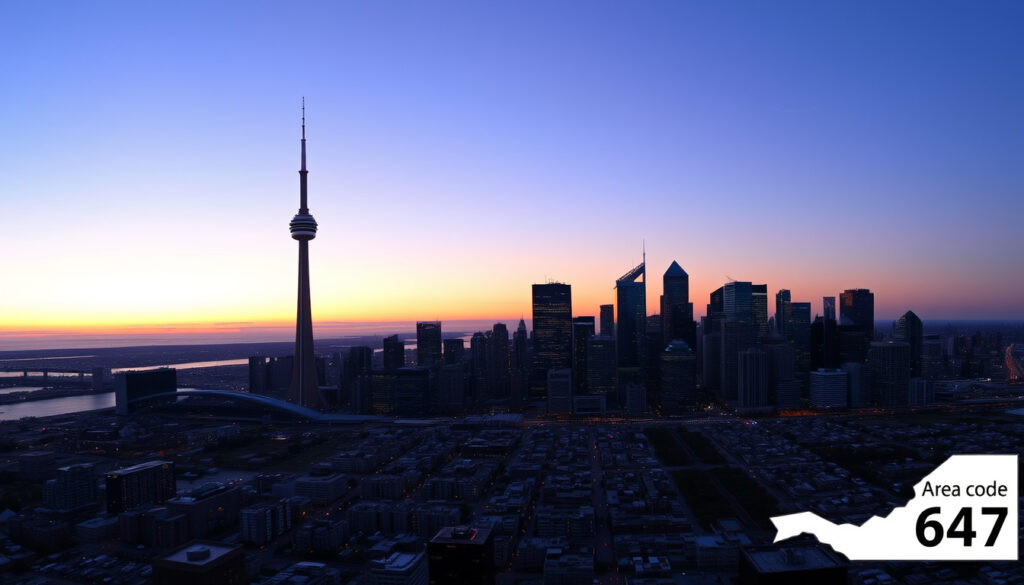
Where Is Area Code 647 – Toronto and GTA Coverage Details
Area code 647 serves Toronto, Ontario, and the surrounding Greater Toronto Area. Established as an overlay code in 2001, it operates alongside area codes 416, 437, and 942, covering one of Canada’s most densely populated regions.
The code was introduced to address growing demand for telephone numbers in Canada’s largest metropolitan region. It functions as a geographic overlay, meaning it covers the same territory as existing codes without requiring changes to local dialing patterns. For anyone researching telecommunications infrastructure in Ontario, understanding this code’s coverage provides insight into how Canada’s urban connectivity operates.
This article examines the geographic scope, history, regulatory context, and common concerns associated with area code 647.
Where Is Area Code 647 Located?
Area code 647 covers Toronto and the surrounding Greater Toronto Area in Ontario, Canada. The code serves both the urban core and suburban municipalities that make up one of North America’s largest metropolitan regions.
Toronto, Ontario, Canada
Overlay for 416/437/942
March 5, 2001
GTA (Greater Toronto Area)
The primary urban center served by area code 647 is downtown Toronto, including well-known areas such as the Financial District, Bay Street, and the CN Tower vicinity. East York also falls within this coverage zone.
The surrounding GTA municipalities included in the 647 coverage area extend to Scarborough, Etobicoke, North York, and parts of York and Durham regions. Suburban communities such as Mississauga, Brampton, Markham, Vaughan, Richmond Hill, Pickering, Ajax, Whitby, Oshawa, and Oakville are also served by this area code.
The code operates entirely within the Eastern Time Zone, specifically UTC-5 during standard time and UTC-4 when daylight saving is observed. Central Toronto coordinates are approximately 43°41′13″N 79°23′35″W, according to geographic data maintained by the North American Numbering Plan Administration.
Key facts about area code 647 coverage:
- The code covers an estimated population of 3 to 6 million residents across the GTA
- Both landline and mobile numbers can carry the 647 prefix
- Businesses frequently use 647 numbers to establish a Toronto presence
- The code shares identical boundaries with area codes 416, 437, and 942
- No changes to local dialing patterns are required due to the overlay structure
| Fact | Details |
|---|---|
| Primary City | Toronto |
| Province | Ontario |
| Country | Canada |
| Status | Active overlay |
| Time Zone | Eastern (UTC-5 / UTC-4 DST) |
| Toll-Free Status | Local calling rates apply |
| NANP Position | 290th area code assigned |
Is Area Code 647 in Toronto?
Yes, area code 647 is definitively located in Toronto. The code was introduced specifically to serve Canada’s largest city and its surrounding metropolitan area. Understanding this requires clarifying what an overlay system means in practice.
Understanding Overlay Area Codes
Area code 647 functions as an overlay for the original 416 code that has served Toronto since the North American Numbering Plan was established in 1947. An overlay means that both codes cover identical geographic boundaries without creating separate zones.
When the overlay was introduced, no geographic division occurred. Instead, new telephone numbers were assigned the 647 prefix while existing 416 numbers remained unchanged. This approach allowed telecommunications providers to issue new numbers without requiring residents or businesses to change their existing contact information.
The overlay structure necessitates 10-digit local dialing, which became mandatory in the Toronto area starting in 2001. Callers must dial the area code plus the seven-digit phone number even for local calls within the same city.
Municipalities Beyond Toronto Proper
While Toronto forms the core of the 647 coverage area, the code extends well beyond the city limits into surrounding municipalities that comprise the Greater Toronto Area. These communities maintain close economic, transportation, and communications ties to Toronto proper.
The coverage includes the former municipalities that were amalgamated into the City of Toronto in 1998, including Scarborough, Etobicoke, North York, East York, and York. It also covers portions of the Durham Region to the east, including Pickering, Ajax, Whitby, and Oshawa.
The exact boundaries for 647 area code coverage align precisely with those of area code 416. The overlay structure means that telephone numbers from any of the overlapping codes (416, 437, 647, and the planned 942) can appear throughout the entire GTA territory. Boundaries do not vary by carrier.
To the west, Oakville and Mississauga fall within the 647 coverage area. Brampton and portions of Halton Region are included. To the north, municipalities such as Markham, Vaughan, Richmond Hill, and other communities in York Region use this area code.
What Country and History for Area Code 647?
Area code 647 belongs to Canada, specifically within the North American Numbering Plan that also covers the United States, Canada, and several Caribbean territories. The code operates under regulatory oversight from Canada’s Canadian Radio-television and Telecommunications Commission and is administered through the North American Numbering Plan Administration system.
Origins of the 647 Code
Area code 647 was activated on March 5, 2001, making it the 290th area code assigned within the North American Numbering Plan and the seventh area code in Ontario at that time. The introduction marked a significant development in Canadian telecommunications infrastructure.
The primary reason for creating the 647 overlay was to address the exhaustion of available phone numbers under the original 416 area code. Toronto’s population growth throughout the late 20th century, combined with increasing demand for mobile phones and business lines, placed significant pressure on the numbering inventory.
The 416 area code had served as Toronto’s sole identifier since the numbering plan’s inception in 1947. By the late 1990s, number availability had diminished to the point where the Canadian Radio-television and Telecommunications Commission approved the overlay solution rather than splitting the geographic region.
Development of Additional Overlays
Following the introduction of 647, continued population growth and telecommunications expansion led to further overlay additions. Area code 437 was created in 2013 as another overlay serving the same GTA territory, addressing ongoing number shortages.
Area code 942 has been designated as a future overlay for the 416, 647, and 437 region, though specific activation dates are determined based on numbering demand projections. This planning reflects the continued growth in telephone service demand across the Toronto metropolitan area.
Currently, Ontario has 19 assigned area codes, with the Toronto overlay cluster representing one of the most complex numbering arrangements in Canada. The system demonstrates how metropolitan regions adapt their telecommunications infrastructure to accommodate sustained growth.
Area Code 647 Overlays and Concerns
The overlay structure supporting area code 647 includes three active codes: 416, 437, and 647, with 942 planned for future implementation. This multi-code arrangement is designed to maximize numbering efficiency while minimizing disruption to existing subscribers.
How the Overlay System Functions
An overlay area code operates by sharing the same geographic boundaries as existing codes rather than carving out separate territories. When 647 was introduced, it simply began assigning new numbers to subscribers in the same coverage area while existing 416 numbers remained unchanged.
This approach offers several advantages. Businesses and residents can retain their original phone numbers without updating letterhead, business cards, website contact information, or emergency contact records. Service providers can continue meeting demand for new connections without waiting for number exhaustion in a single code.
The mandatory 10-digit dialing requirement applies uniformly across all overlay codes in the region. Callers must always dial the appropriate area code, whether calling locally or between communities within the GTA.
Consumer Awareness and Scam Concerns
Area code 647 has been associated with consumer protection concerns, primarily related to telephone scams that exploit the code’s local appearance. Fraudulent callers often use caller ID spoofing to display 647 numbers, making calls appear to originate from legitimate Toronto businesses or government agencies.
The association with scams does not indicate that the area code itself is problematic or that any specific phone number is inherently fraudulent. Rather, the local appearance makes 647 numbers attractive to scammers seeking to establish apparent local connections with potential victims.
Area code 647 is a standard geographic code serving Toronto and the GTA. It is not toll-free. Local calling rates apply to calls within the region. If you receive an unexpected call from a 647 number claiming to represent a business or government agency, verify the caller’s identity through official channels before providing any personal information.
Consumer protection advice includes verifying providers before engaging with telephone solicitations, particularly those requesting payment, personal information, or immediate action. Legitimate businesses and government agencies typically provide verifiable contact information through official channels.
The prevalence of scam calls through area code 647 reflects broader trends in telephone fraud across North America, where fraudsters exploit geographic codes from high-income metropolitan areas to increase their success rates.
Timeline of Key Events
The development of area code 647 and its overlay structure spans several decades of telecommunications planning. The following timeline outlines the major milestones in the Toronto area code system.
- 1947 — Area code 416 established as the original code for Toronto when the North American Numbering Plan was implemented
- Late 1990s — 416 numbering inventory approaches exhaustion due to population growth, mobile device adoption, and business expansion
- March 5, 2001 — Area code 647 activated as Canada’s first overlay code, relieving pressure on 416 availability
- 2001 — Mandatory 10-digit local dialing implemented throughout the Toronto overlay region
- 2013 — Area code 437 introduced as the third overlay, adding additional numbering capacity
- Future — Area code 942 designated as planned fourth overlay, pending activation based on demand
What Is Confirmed and What Remains Unclear
Several aspects of area code 647 are well-documented through regulatory records and telecommunications industry sources, while other details carry varying degrees of uncertainty or lack public documentation.
| Confirmed Information | Uncertainty or Limited Data |
|---|---|
| 647 serves Toronto and the GTA | Precise number of active 647 lines in use |
| Activation date: March 5, 2001 | Detailed projections for when 942 will activate |
| Overlays 416 and 437 | Comprehensive scam call statistics by area code |
| First overlay code in Canada | Complete carrier-by-carrier market share data |
| Subject to CRTC regulation | Specific future expansion plans beyond 942 |
The regulatory framework for area codes falls under the CRTC’s authority, though specific implementation decisions and detailed technical documentation are not always publicly released. Numbering demand projections are updated periodically based on telecommunications industry reporting.
Context and Regional Significance
Area code 647 operates within one of Canada’s most economically significant regions. The Greater Toronto Area serves as the country’s financial hub, cultural center, and a major gateway for international business and immigration.
The telecommunications infrastructure supporting this region must accommodate diverse needs ranging from residential connections to enterprise-level communications systems. The multi-overlay structure reflects the scale of demand generated by millions of residents, businesses, and visitors who rely on telephone connectivity.
For businesses, particularly those using Voice over Internet Protocol services, the 647 area code offers a way to establish a Toronto identity without physical presence. This capability has made the code popular among companies serving the Canadian market from other locations.
The dense population and mobile-heavy communication patterns in the GTA continue to drive numbering demand. Telecommunications planners monitor utilization rates and adjust overlay strategies accordingly to ensure adequate numbering inventory remains available.
Sources and Regulatory Framework
Area code administration operates through a structured regulatory framework involving both Canadian and North American authorities. The Canadian Radio-television and Telecommunications Commission maintains oversight of telecommunications numbering within Canada, while the North American Numbering Plan Administration manages the broader numbering system across participating countries.
Publicly available sources documenting area code 647 include telecommunications companies, industry publications, and geographic information databases. While specific internal CRTC or NANPA planning documents may not be publicly accessible, the general framework and implementation dates are well-established through multiple corroborating sources.
The overlay approach allows numbering resources to be added without disrupting existing service, minimizing customer inconvenience while addressing growing demand in high-usage metropolitan areas.
The telecommunications numbering system demonstrates how regulatory bodies balance competing interests: maintaining continuity for existing subscribers while enabling growth to accommodate new connections. The Toronto overlay cluster represents one of the most studied implementations of overlay numbering in North America.
Summary
Area code 647 is a geographic overlay serving Toronto, Ontario, Canada, and the surrounding Greater Toronto Area. Activated on March 5, 2001, it was Canada’s first overlay area code, designed to address numbering exhaustion from the original 416 code that had served the region since 1947.
The code covers downtown Toronto and extends to surrounding municipalities including Scarborough, Mississauga, Brampton, Markham, Vaughan, Richmond Hill, and numerous other GTA communities. It operates within the Eastern Time Zone and shares identical boundaries with area codes 416, 437, and planned overlay 942.
For those seeking local Toronto connection information, understanding the area code distribution provides context for telecommunications patterns in the region. Area code 647 is not toll-free, and local calling rates apply to calls within the coverage area.
Frequently Asked Questions
Is area code 647 only for Toronto?
Area code 647 covers Toronto and the entire Greater Toronto Area, including municipalities like Mississauga, Brampton, Markham, and others within the GTA boundary.
What country uses area code 647?
Area code 647 is part of Canada, operating within the North American Numbering Plan that also covers the United States and several Caribbean territories.
When was area code 647 created?
Area code 647 was activated on March 5, 2001, as Canada’s first overlay area code to relieve numbering pressure on the original 416 code.
Is 647 a toll-free area code?
No, area code 647 is not toll-free. It is a geographic area code, and local calling rates apply for calls within the Toronto and GTA coverage area.
What other area codes overlap with 647?
Area code 647 overlaps with 416, 437, and planned future overlay 942. All four codes serve the identical GTA geographic territory.
Why do I receive scam calls from 647 numbers?
Scammers use caller ID spoofing to display local area codes like 647, making fraudulent calls appear to originate from legitimate Toronto sources. The code itself is not problematic.
Do I need to dial area code for local calls in 647?
Yes, 10-digit local dialing is mandatory throughout the Toronto overlay region. You must dial the area code plus the seven-digit number for all local calls.
More related posts
 WWE Wrestlers List: Top 10, All Names & All-Time Greats
 D-Wave Quantum Stock – Price, Performance & 2025 Forecast
 Who Won the Last World Cup? Argentina’s 2022 Victory
 Darius Macdougall Missing: Family Leads Search
 Symptoms of Heart Attack – Warning Signs for Men and Women
 What Does 6-7 Mean? TikTok Teen Slang Explained
 Kelly Clarkson Weight Loss – How She Lost 60 Lbs in 2024
 Caleb Williams: Biography, Stats, Nail Meaning & Speed